Newsjunkie
Courts repeatedly force federal agencies to restore public-facing data
How the federal web presence is changing and who it affects
The Data Justice Hub is an initiative that empowers students, community organizations, and faculty to access and use data to rectify harm. We hope this digital tool will help train the next generation of social justice and data change agents. With an estimated population of approximately 10 million people, Los Angeles County is the most populous in the United States and, thus, consequential for our understanding of the world at large. This online data directory provides easy access to open-source datasets containing valuable information about the Los Angeles region. Assembled under different tabs are links to datasets, trainings, and analysis relevant to studying the greater Los Angeles region. Specifically, the datasets have been curated in relation to a range of social justice issues: policing, incarceration, economics, education, climate change, food insecurity, gender, racialization, houselessness, political disenfranchisement, migration, public health, and state violence.
This site has been developed through the Mellon Social Justice Curricular Initiatives at UCLA. The new "Data, Justice, and Society" curricular initiatives aim is to create a "data-driven approach to teaching and research on social justice issues, positioning more UCLA graduates to become social change leaders in their chosen professions."
Data-based computation (i.e. algorithms, Artificial Intelligence, predictive modeling) increasingly play a dominant role in shaping our everyday experiences of culture, work, and society. Data and data analytics impact everything from social relations and public policy to juridical status, governance, and market logistics. Yet, exactly how does the rise of technological corporate wealth compare with the standard of living of Los Angeles's "working poor"?
Since data-based claims are embedded in complex power relations, the mission of this website is to encourage "data justice" methods and analysis that challenges the injustices confronting the diverse communities of the greater Los Angeles region. Data Justice is a technique and ethos emerging from the new field of Critical Data Studies (CDS) that asks questions such as the above. A "data justice" critical view recognizes the link between the increasing datafication of society and social inequality. On the one hand, a data justice approach places a critical lens on the way "Big Tech" deploys data-driven algorithms to cause harm. On the other hand, data justice researchers and practitioners mobilize analysis of open-source datasets as well as findings from other data sources to redress these harms. Data justice aspires to enact change precisely through more ethical and just application of data.
We hope this site will provide you with resources to enact data justice vis a vis the social issues of most concern to the most vulnerable communities in Los Angeles.
This site is meant as an instructional tool to empower members of the UCLA community and public with easier access to datasets relevant to research on selected social justice issues. To find such datasets, we recommend opening the "Data and Dashboards" tab and opening the link to the social justice issue of your choice. The list of sites that you will find contain repositories of vast amounts of data that you can analyze to better understand some of the largest issues facing the Los Angeles communities today.
For introductions on how to work with some of the largest open-source databases, such as the U.S. Census and Bureau of Labor Statistics, we recommend reviewing "Data Training and Education." To learn more about the emerging field of Critical Data Studies, please consult the tab "Recommended Readings and Resources."
We look forward to soon featuring the exciting "Data Justice" scholarship taking place at UCLA by faculty and students. Stay tuned!


The LA Data Justice Hub is sustained by the collaborative efforts of UCLA students, researchers, faculty, and administration who provide ongoing feedback and input. The Center for Community Engagement, where this hub is hosted, plays a crucial role in supporting and maintaining this initiative. We are also grateful to the members of Los Angeles's vibrant community who contribute their insights and expertise.
Of special mention is the Hub’s Research & Public Scholarship, including collaborative public-facing analysis with Newsjunkie on federal data infrastructure and data justice, as well as student work often drawn from the UCLA Digital Humanities course Race, Gender, and Data.
Aims to highlight algorithmic bias through media, art, and science; provide space for people to voice concerns and experiences with coded bias; develop practices for accountability during the design, development, and deployment of coded systems.
Aims to build a powerful movement for a more just and participatory media and digital world—with racial equity and human rights for all.
Project gathers stories from across Latin America about the mass collection and processing of data that governments, businesses and individuals carry out to monitor "cities, homes, wallets and bodies."
A group of various multidisciplinary organizers who aim to use data to "create concrete and measurable change in the lives of black people." By convening an annual conference, the group speaks to data scientists, policy makers, researchers, students, parents and more to "chart out a new future for data science."
UCLA series that organizes weekly conversations with a diverse group of science and humanities scholars about social, gendered, and racial justice in data science.
A set of guidelines for advancing "equitable practices for collecting, disseminating and using open data."
Site promoting and asserting indigenous control of indigenous data.
A critical internet studies community committed to strengthening human rights, championing social justice, and reimagining technology through research, culture, and public policy.
In its own words, this project "is a declaration of refusal and commitment. It refuses harmful data regimes and commits to new data futures." To learn more about the document, its context, or its authors — one of whom, Professor Tonia Sutherland, teaches in UCLA's Department of Information Studies — visit the site linked in the title.
This section will feature some examples of how data is being used for social justice and transformation. This is not an exhaustive list, and some examples that might be helpful for envisioning what a data for justice project might look like. We hope this section will encourage others to dream up and create new "Data for Justice" projects.
*This is a non-exhaustive list of some topics where data can inform social justice work. We hope to add a submission tab in the near future.
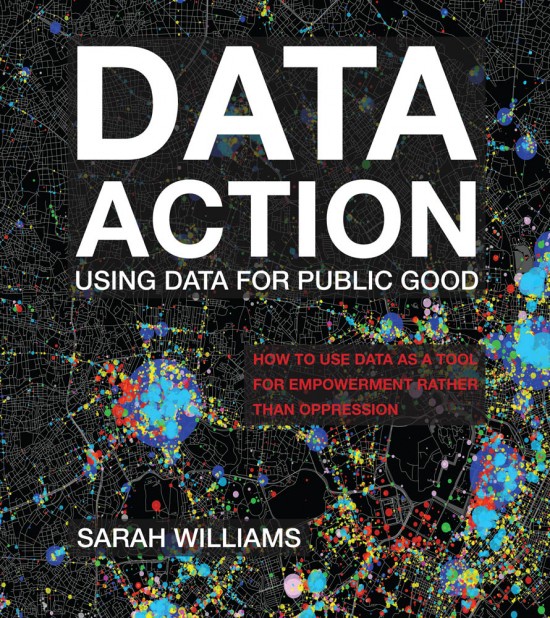
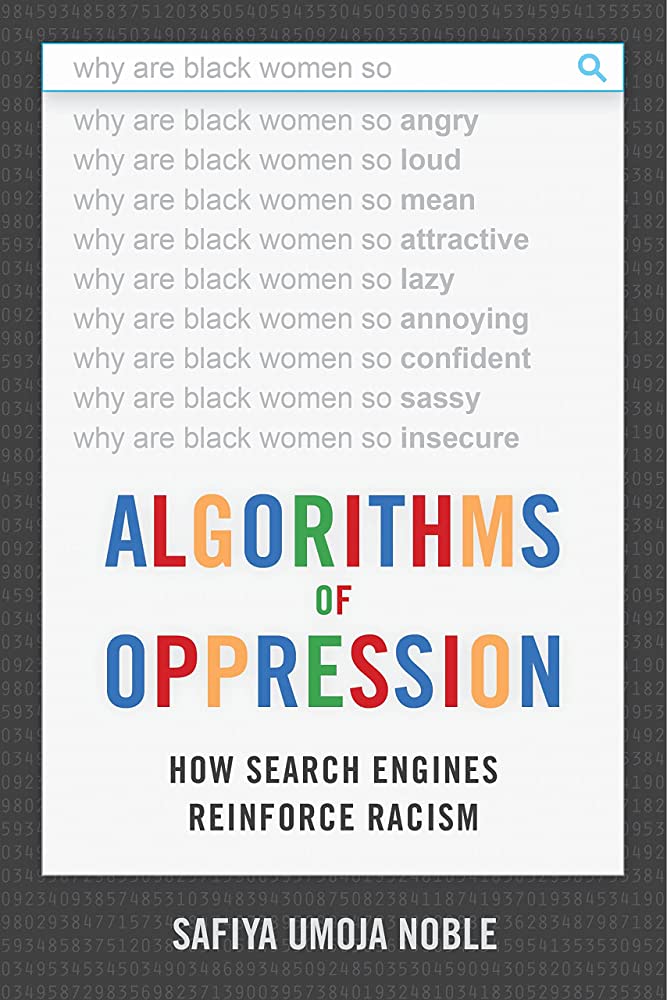
As well as the open-source examples under the Featured Examples tab, the following resources and readings are highly recommended for anyone who is interested in better understanding how data can be misused, and just as importantly, the role it can play in empowering communities.







This section brings together trusted sources of open data. Before exploring them, it is useful to understand what open data is and why it matters. Open data refers to information that anyone can access, use, and share with minimal restrictions. It lowers barriers so communities, researchers, and institutions can study problems, build tools, and develop insights that support justice and accountability.
Several frameworks guide how people and organizations release data to the public. They emphasize accessibility, transparency, interoperability, and equity so that open data can meaningfully serve its users.
As Christine Borgman explains, however, making data open does not automatically make it reusable. Her work highlights a number of practices that influence whether data can actually be understood and applied by others, including ideas such as Context is Crucial, Knowledge Exchange vs. Transaction, Infrastructure Involves People, Not Just Technology, Incentives Matter, Purpose Driven Strategies, Recognize the Distances, and Support for Reproducibility. These concepts point to the social, technical, and institutional conditions needed for genuine reuse.
For a deeper discussion of these practices and why they matter, see Christine L. Borgman's Big Data, Little Data, No Data: Scholarship in the Networked World (2015), listed in the Recommended Readings section.
Acronym: FAIR (Findable, Accessible, Interoperable, Reusable)
Acronym: CARE (Collective Benefit, Authority to Control, Responsibility, Ethics)
Acronym: ODC (Open Data Charter)
Please note that Los Angeles City data is distinct from Los Angeles County data, as well as state and national data. All of these distinct data hubs each contain valuable data about Los Angeles, although covering different geographic scopes. The best way to identify which data you need is to explore the individual links. In several of the sites below, you will also be able to locate data by inputting a specific Zip Code. This technique will enable you to find data about a particular neighborhood.
There are many online resources on how to use open data to conduct data analysis. Below is an initial compilation of some recommended resources, but there are many more available on the internet.
U.S. Census Data: Tips and videos on how to utilize U.S. Census data, including exporting excel tables, cleaning data, and creating a map with census tracts.
Many of the U.S. governmental offices maintain some online tutorials, including U.S. Bureau of Labor Statistics, the National Center for Education Statistics, and the U.S. Bureau of Justice Statistics. There are many more resources that can be found depending on your interest.
This section of the LA Data Justice Hub presents examples of data analysis research pipelines, illustrating different ways to approach datasets and extract insights. Data analysis is inherently exploratory—there is no single path, but rather multiple methods depending on the questions asked and the tools used. By showcasing concrete examples, from data collection to analysis, visualization, and communication, we aim to provide useful reference points for researchers, advocates, and policymakers. These walkthroughs highlight the diversity of approaches while offering practical guidance for structuring and conducting data-driven investigations.
This project provides a hands-on exploration of Los Angeles census data through interactive tools and tutorials, challenging traditional narratives of the digital divide. By walking through data collection, analysis, and visualization techniques, users can critically examine how digital access disparities are shaped by infrastructure rather than simplistic assumptions about technological awareness.
This article critically examines the dominant narratives surrounding the "digital divide," challenging reductive understandings of digital access disparities. Through an analysis of census data on internet and computer access in Los Angeles, the study illustrates how statistical interpretations often flatten the complexities of digital inequities, reinforcing harmful stereotypes. Using data visualization techniques, the research highlights the limitations of the binary framing of digital access and demonstrates how marginalized communities actively navigate and adapt to infrastructural barriers. By comparing broadband and computer access with mobile device and data usage, the article deconstructs the myth of totalizing disenfranchisement, showing that digital inequities are not merely a matter of access but are embedded within structural and racialized infrastructural inequalities. The findings emphasize the need for a more nuanced discourse that recognizes both systemic constraints and the agency of communities in shaping their digital experiences. This work contributes to the broader discussions on data justice, digital equity, and the socio-political implications of how access is framed in policy and public discourse.
Click here to read the full article. [forthcoming]
The Data Collection section includes two collaborative Jupyter notebooks structured as explicit, pre-coded tutorials. These walkthroughs guide users through the process of downloading U.S. Census data and conducting example data analyses using Python. By providing step-by-step code and explanations, these tutorials serve as practical resources for exploring demographic and infrastructural data, helping to bridge the gap between raw datasets and meaningful insights.
The Tableau dashboard provides an interactive tool for exploring Los Angeles census data, enabling a critical examination of the so-called digital divide. By shifting between granular local insights and broader citywide trends, the dashboard challenges the empirical validity of the term, emphasizing that disparities in digital access primarily reveal infrastructural inequalities rather than differences in awareness or technological literacy across communities.
The LA Data Justice Hub supports public-facing research and analysis on the collection, accessibility, and social consequences of data. In collaboration with Newsjunkie, this preliminary research examines changes to federal data infrastructure, including the removal of public datasets, changes to government surveys, and their implications for data justice.
Please contribute to this site by filling out this brief survey to help us improve: